

April 7, 2025
Audiological perspective – if we can improve our hearing through the use of hearing aid devices, can we reduce or avoid the risks of dementia?
Properly fitted hearing aids are known to reduce listening effort, allowing for more cognitive resources to be available for other brain tasks. Hearing aids can also re-stimulate areas of the brain that have been neglected due to hearing loss. Hearing intervention can definitely improve communication benefits and help you socially engage more. Lastly, hearing aids are known to improve social communications, which may prevent or delay dementia.
Evidence from the latest study by John Hopkins experts in 2023 shown hearing intervention indeed can reduce risk of cognitive decline among the high-risk seniors group (with hearing loss) by almost 50%. Evidence is also building that hearing loss may be the most impactful modifiable risk factor for dementia.
Fears and concerns behind the delay in seeking hearing intervention
As aging-related hearing loss deteriorate slowly over time, many actually get used to hearing less sound without realising it. This explains why many individuals with hearing loss delay in seeking hearing treatment. Hearing aid users wait, on average, 7 to 10 years before getting help for hearing loss. During this time, communication with loved ones becomes more difficult. Social isolation and other health risks surfaces or increase.
Truth is, these individuals are often aware of their hearing loss. However, they do not feel the impact or significance as loved ones like family members learn to accommodate by working around their hearing difficulty though in some cases, family members even stopped talking to them. Family members often shared their seniors with hearing loss could not hear them when they call them from another room or kitchen in the house. When asked, the said senior commented the family member speaks softly or should talk to them from the front. Loved ones can learn to accommodate but what happens when you are outside? Cyclist or cars driving past may not.
Communication breakdowns, safety concerns and signs related to dementia and other health risks are worrying and highlight the importance of good hearing for independent, better quality of lives, relationships and more.
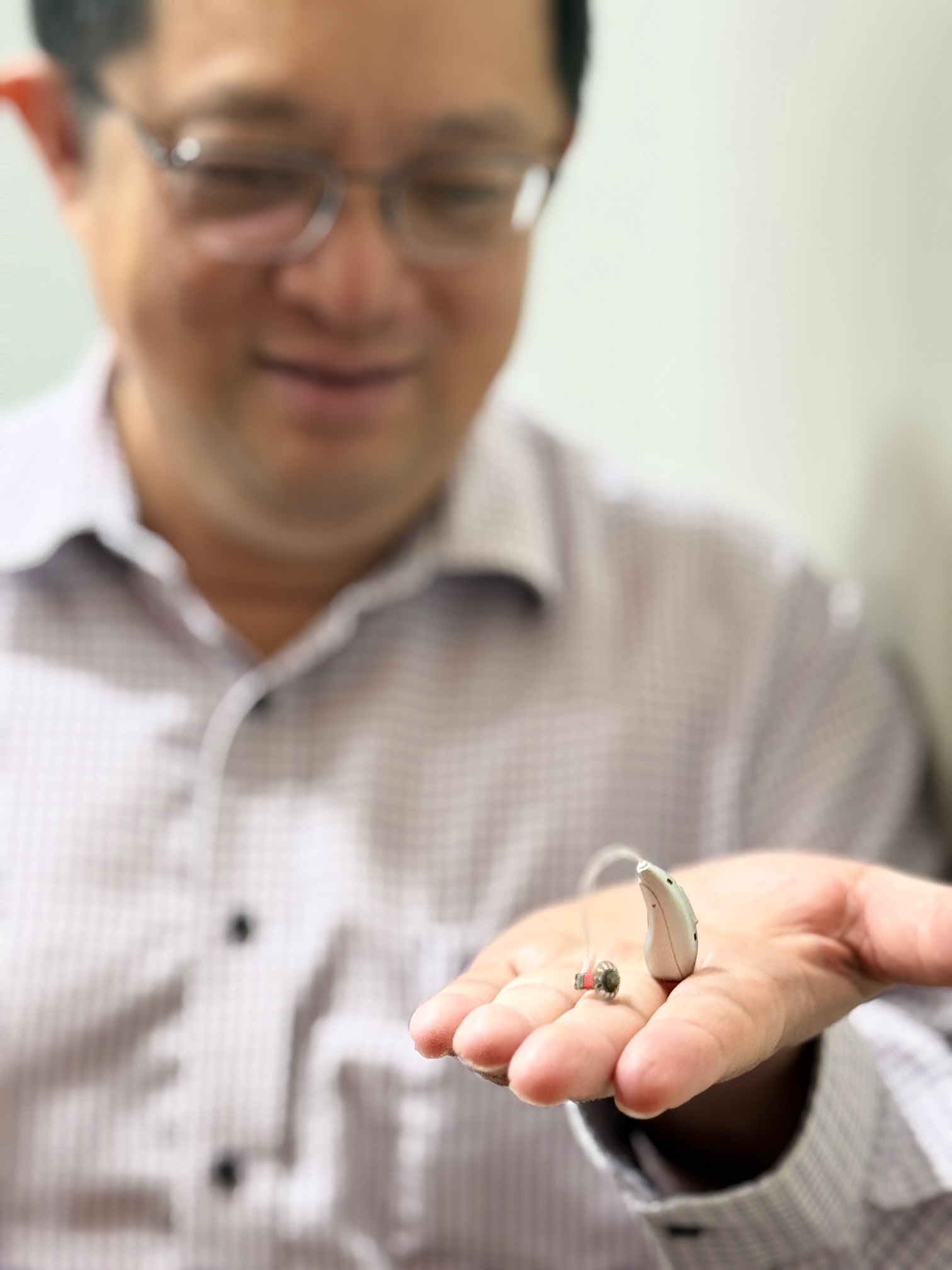
Other concerns include fear of handling new technology. Some think that hearing aids big, noisy or not comfortable to use. Having to buy and change small batteries can also be challenging for seniors with limited mobility/dexterity. Such concerns are valid and are addressed by modern smart hearing aids. Today’s hearing aids are not only smaller in size, they are often equipped with rechargeable and wireless Bluetooth technologies that make the aids easy and effective to use.
Advances in Hearing aid technology
Hearing aid technology has advanced significantly over the last 3 decades, from analog to digital signal processing to today’s AI based hearing aids that is equipped with Deep Neural Network (DNN) sound processing. With the introduction of rechargeable, wireless connectivity technologies, listening to mobile phone conversations and TV programs have become an easy and enjoyable experience again.
New advancements in hearing aid technology with the use of Artificial Intelligence (AI) has proved to significantly diminish background noise. This new approach toward de-noising had led to remarkable enhancement in speech intelligibility and comfort for individual using hearing aids.
With a fast aging society like Singapore, early diagnosis of hearing loss and hearing aid intervention becomes necessary and important. With advances in hearing aid technology, hearing aid has become both easy to use and effective to use.