

November 7, 2025
For many people, hearing loss doesn’t happen overnight — it creeps up gradually, often without being noticed. By the time family members begin to raise their voices, conversations are missed, and social gatherings feel exhausting, the affected individual may already be living in partial silence.
According to Singapore’s National Population Health Survey, nearly one in ten people aged 60 and above experiences hearing difficulties. Yet only a small number actively seek treatment, even though untreated hearing loss can lead to frustration, withdrawal, and cognitive decline.
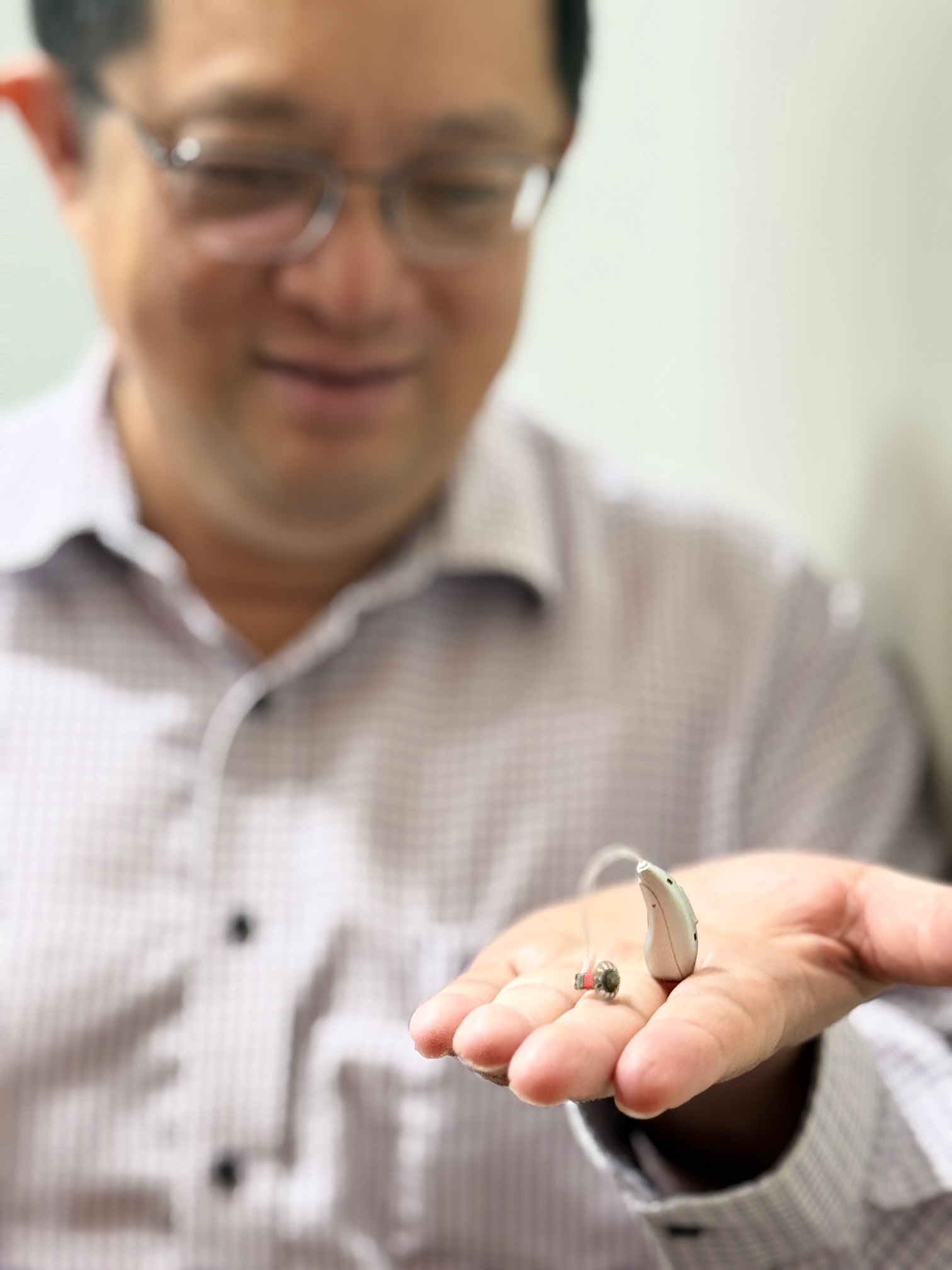
Hearing aid rehabilitation is both a science and art. Successful hearing aids outcome depends on two key pillars:
(1) technical requirements
(2) rehabilitation process management.
It is not uncommon to hear patients coming into our clinic looking for a better hearing solution hoping to solve their hearing problems, knowing they are not first-time hearing aid users. Many shared they actually had been fitted with hearing aids before but stopped using them shortly after they were fitted (often using them for less than 6 months).
The most common reasons cited were:
– The amplified sounds are too loud, noisy and uncomfortable.
– Still cannot hear well especially in noisy places just like before.
– Still unable to hearing the family/ friends’ conversation over dinner/ gathering setting
– Difficulty putting on the aids themselves.
User case study: from denial to rediscovery
Take 74-year-old Mr. Zhang, for example. Once a lively and sociable man, he began avoiding group conversations because he couldn’t catch what others were saying. “At first I thought people were just mumbling,” he recalls.
Ms Zhang, daughter, shared that her father had been fitted with binaural hearing aids in another hospital about 5 years ago but only used them for less than 6 months. All the father can remember was that the aids were noisy and uncomfortable to use. Although he was given various accessories, he does not know how to use them and just leave them aside. Ever since the unpleasant experience, her father refused to try hearing aids again, thinking hearing aids just doesn’t work at all. After 5 years, the daughter finally managed to convince her dad to give hearing aids a second chance and brought him to our clinic.
After a comprehensive hearing assessment at The Hearing Specialist, he was fitted with a pair of modern AI hearing aids. Mr Zhang shared that with his AI hearing aids, not only can he hear better, especially in noisy environments which he used to struggle with, he also feel less stressed and are happy to socialise, engage in favourite activities he used to like again. His family members also noticed the significant positive difference.
“Now I can hear the TV clearly, follow conversations, and even enjoy music again,” he said with a smile. “It’s like I’ve rejoined the world.”
Ms Zhang’s father is not a unique case. It’s more common than you think.
Many patients come to us after giving up on hearing aids they tried years ago — often after using them for less than six months.
So what can go wrong?
Firstly it is important to help patients to not only understand their hearing conditions but also the hearing aid technologies available – what they are designed for and what it can do for them: help to reduce or solve their hearing problems.
A properly fitted hearing aid involves not just the selection of suitable model & style and also the customisation of the various components’ details to optimise the resultant sound quality for each patient, along with comfort and reliability. These factors consideration can be complex and best be facilitated by consulting an experienced Audiologist.
Secondly, the Audiologist can help the patients to adapt confidently and comfortably – build confidence in technology, confidence to use hearing aids and confidence to hear sounds again. This involves professional guidance with close follow up sessions for users to adapt to hearing sounds at the right sensation levels, progressively.
It is important for users to feel supported, not alone in the hearing management journey so they can just focus on the simple step of using hearing aids.