

August 22, 2026
**************
| “In many cases, who you see matters more than what you wear.”
**************
Hearing Aids Are Only Part of the Solution
Hearing aids remain the most effective treatment for the vast majority of age-related hearing loss.
While no hearing aid can restore hearing to perfect normal levels, modern technology can provide substantial improvements in communication, participation and overall wellbeing. However, successful hearing rehabilitation involves much more than selecting a hearing aid.
At The Hearing Specialist, we focus on helping seniors achieve successful hearing outcomes — not simply providing hearing devices.
The difference lies in understanding the person behind the hearing loss.
The Software: The Human Side of Hearing Rehabilitation
Many people focus entirely on the hearing aid itself. Yet the most important component of successful rehabilitation is often the “software” — the professional expertise, counselling and support behind it.
Accurate Assessment and Understanding
A hearing assessment should do more than produce numbers on a report.
An experienced Audiologist helps patients understand how their hearing loss affects everyday situations and why communication difficulties occur. For many seniors, accepting and understanding the hearing problem is the first and most important step toward improvement.
Counselling Throughout the Journey
Counselling is not a one-time discussion. It begins from the first consultation and continues throughout the rehabilitation process.
Patients need guidance to understand:
– what hearing aids can achieve
– what hearing aids cannot achieve
– how to set realistic expectations
– how to overcome adjustment challenges
Being assured they have access to professional guidance and support are vital to the successful rehabilitiation outcome.
Helping the Brain Relearn Sound
Many have spent years hearing less than they should. When amplification is introduced, the brain needs time to adapt to sounds that have been missing for years.
Progressive adjustments, coaching and encouragement are often necessary to achieve long-term success.
Fast and Reliable Ongoing Support
Many seniors are understandably anxious when hearing aids stop functioning or when they encounter difficulties.
Prompt access to professional support can make the difference between continued success and complete abandonment of hearing aids.
Why Trust and Support Matter
“I was so scared last night when my hearing aids suddenly stopped working. I am so grateful that the problem was resolved the very next day. I am so happy to hear again.”
Mdm Goh, 85, first visited our clinic 12 years ago with severe hearing loss. An active volunteer with a vibrant social life, she relies heavily on her hearing aids to remain connected with family, friends and community activities.
She often shares that hearing aids are the first thing she reaches for every morning.
“The fast support and warm professional service have given me confidence and trust.”
Her story reminds us that for many seniors, hearing aids are not simply devices. They are essential tools that allow them to continue living socially, independently and staying connected with the people around them.
Our experience has shown that lack of prompt and reliable support is one of the major reasons why many seniors eventually stop using or benefiting fully from hearing aids.
The Hardware: Choosing the Right Technology
The second component of successful rehabilitation is selecting the right hearing aid technology for the individual’s hearing needs and lifestyle.
Today’s hearing aids are significantly more advanced than many people realise.
Features such as:
– rechargeable batteries
– wireless Bluetooth connectivity
– television and phone streaming
– AI-powered speech intelligibility, noise reduction management
are now helping users hear more comfortably and effectively in a wider range of listening situations.
The Right Technology Can Change Everything
“I didn’t expect changing to a different hearing aid style and technology could make such a big difference.”
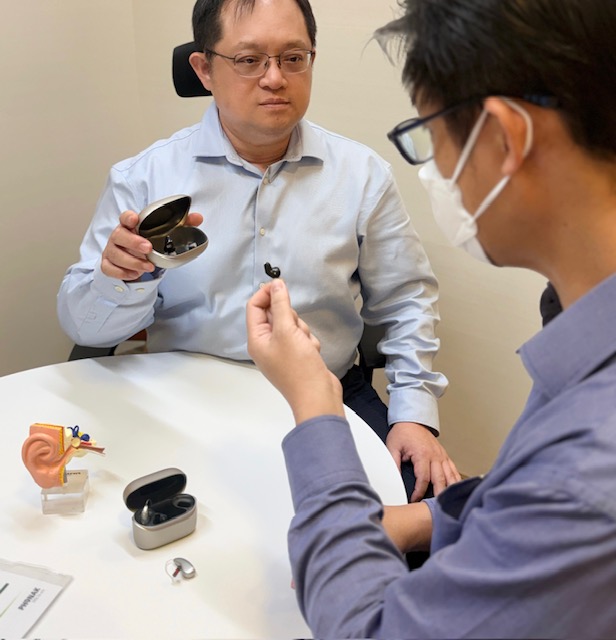
Mr Andrew had been using a completely-in-canal (CIC) hearing aid for four years prior to consulting us. After a detailed reassessment of his hearing needs and listening challenges, he was fitted with a newer AI-powered rechargeable receiver-in-canal (RIC) hearing aid.
The new technology provided:
– greater amplification power
– advanced AI noise reduction
– improved speech clarity
– direct wireless streaming from television, mobile phone and tablet devices
For Mr Andrew, hearing television programmes, enjoying music and following conversations with confidence once again became possible.
Modern Hearing Aids Have Changed More Than Most People Realise
Many seniors delay seeking help because their impression of hearing aids is based on devices they saw years ago.
Today, many longstanding concerns have been addressed.
Custom in-the-ear hearing aids can eliminate concerns about interference with spectacles or masks. Rechargeable technology removes the need to handle tiny batteries, making hearing aids easier to manage for users with arthritis, reduced finger dexterity or poorer vision.
Bluetooth wireless connectivity, once available only in larger hearing aid models, is now offered in many custom-made hearing aids. Sounds from televisions, mobile phones, tablets and computers can be streamed directly to hearing aids for greater clarity and reduced listening effort.
Importantly, many of these technologies are now available even in entry-level hearing aids, making them accessible to more users.
The greatest benefit, however, is not the technology itself. It is what the technology allows seniors to do again.
Hearing a grandchild’s voice clearly. Enjoying conversations with family. Following television programmes comfortably. Staying connected with loved ones living overseas. Participating confidently in social activities.
Technology alone does not restore quality of life. But when combined with professional audiological care and ongoing support, it can help seniors reconnect with the people, activities and sounds that matter most.
Technology Is Only Part of the Answer
Modern hearing aids have advanced tremendously, but technology alone is rarely enough.
The best outcomes occur when appropriate technology is combined with experienced audiological care, realistic counselling and ongoing support.
For seniors, successful hearing rehabilitation is not about simply wearing a hearing aid. It is about staying connected to family, maintaining independence and continuing to enjoy the sounds and relationships that make life meaningful.